
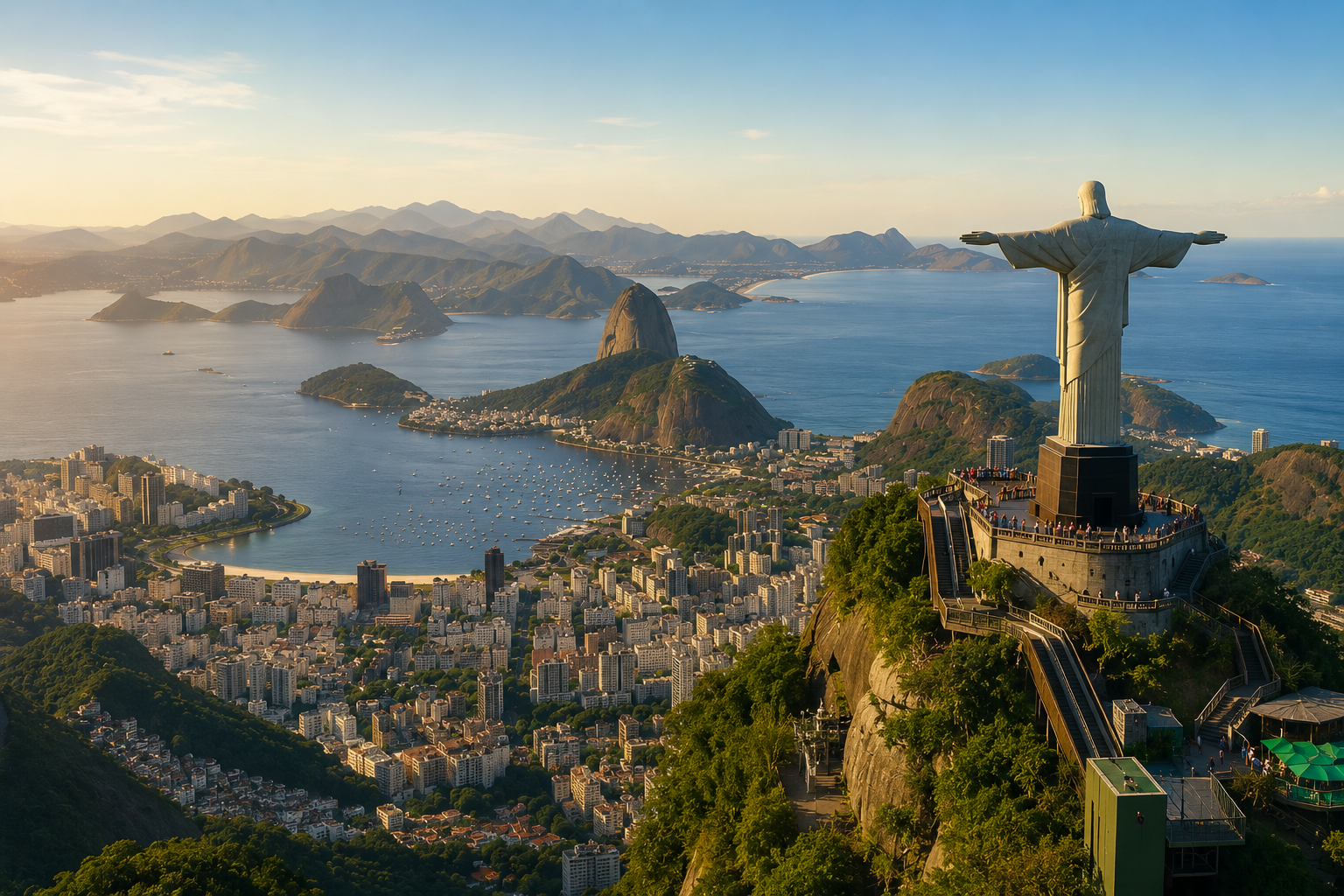
‘Brazil is in fashion’ – a phrase often used to describe the current popularity of the country. Whether it is for its endless pristine beaches, way of living, music and/or food, in the past few years tourism has been booming in the land of samba and sunshine. This popularity is reflected in the substantial growth in international arrivals, reaching approximately 9.3 million visitors in 2025, a 37% increase compared to the year before.
Historically, Rio de Janeiro has always been the country’s postcard destination. Its unique combination of nature, culture and cuisine has attracted tourists from all over the world for decades and continues to uphold its reputation. The recently added annual mega-concerts on the beach of Copacabana, with artists such as Madonna and Shakira, only added to its appeal.
But Brazil is a vast country, with many different ecosystems, climates, and cultural hotspots. In this post we explore the different regions attracting foreign tourists, the government’s efforts in tourism growth and long-term expectations.
Record numbers
Brazil’s tourism sector recorded historic growth in 2025. International arrivals reached approximately 9.3 million visitors, representing a 37% increase compared to 2024 and marking the highest number ever recorded in the country. Foreign tourism revenue also rose sharply, reaching nearly USD 8 billion for the year.
The aviation sector reflected this momentum. Brazil’s airports are expected to have handled nearly 130 million passengers in 2025, the highest annual figure in the country’s history and above pre-pandemic levels for the first time. International passenger traffic grew particularly strongly, increasing by roughly 13.6% year-on-year to 25.8 million travellers. São Paulo–Guarulhos alone handled nearly 15 million international passengers, while Rio de Janeiro–Galeão surpassed 5 million.
Tourism growth has also translated into rising hotel occupancy rates across major destinations. During peak periods such as Carnival and major international events, occupancy in Rio de Janeiro exceeded 85%, while several northeastern tourism hubs recorded double-digit growth in passenger traffic and accommodation demand. Airports in Northeast Brazil handled more than 16.8 million passengers in 2025, up 5.7% compared to the previous year.
While Rio de Janeiro and São Paulo remain Brazil’s strongest tourism markets, growth is increasingly spreading toward the northeast coastline, Santa Catarina and ecotourism regions such as the Amazon and Pantanal. This broader regional expansion reflects the growing diversification of Brazil’s tourism economy and international appeal.Visitors from neighboring countries account for a significant share of international tourism, partly due to relatively short travel distances.
What is driving growth?
Brazil’s tourism growth is being driven by a combination of changing travel trends, global exposure and the country’s increasing international accessibility. Over the past few years, Brazil has become significantly more visible on social media platforms, where destinations such as Rio de Janeiro, the northeast coastline and the Amazon have gained worldwide attention for their combination of nature, lifestyle and cultural identity.
At the same time, broader shifts within the tourism industry are playing strongly in Brazil’s favour. Ecotourism, wellness travel, luxury nature-focused experiences and digital nomadism have all grown rapidly in popularity, areas in which Brazil holds a unique position due to the scale and diversity of its landscapes and ecosystems.
The country is also benefiting from growing international interest in Latin America as a whole. Compared to previous decades, the region is increasingly viewed as more stable, internationally connected and strategically relevant, attracting not only short-term visitors but also longer-term residents, entrepreneurs and foreign investors.
For many international travellers, Brazil also remains surprisingly accessible geographically. Destinations in the northeast such as Fortaleza can be reached from parts of Europe in roughly eight to nine hours, making the country considerably closer to major Western markets than often assumed.
Different regions, different profiles
Tourism plays an increasingly important role in Brazil’s economy. According to the World Travel & Tourism Tourism-related investment in Brazil is increasingly spreading across multiple regions, each attracting different types of visitors and investor profiles. Rio de Janeiro remains the country’s most internationally recognised destination and continues to attract strong interest in hospitality, luxury real estate and short-term rental investments. The combination of beaches, culture, nightlife and international visibility ensures that Rio and its surrounding coastal regions remain structurally popular with both tourists and foreign investors.
At the same time, much of Brazil’s long-term tourism growth potential is increasingly concentrated along the northeast coastline. States such as Bahia, Ceará and Rio Grande do Norte are attracting growing attention due to their year-round tropical climate, expanding infrastructure and relatively early-stage real estate markets compared to more mature global tourism destinations. Cities such as Fortaleza and Natal are benefiting from improving international connectivity while continuing to offer comparatively lower entry prices for hospitality and residential investment.
Southern Brazil, particularly Florianópolis and Balneário Camboriú, has meanwhile positioned itself as one of South America’s strongest lifestyle and luxury tourism markets, remaining especially popular among Brazilian and neighbouring South American tourists.
Hospitality and real estate opportunities
The rapid growth of Brazil’s tourism sector directly creates opportunities across hospitality and tourism-focused real estate. Rising international arrivals, expanding domestic tourism and improving international connectivity are driving strong demand for short-term rentals, boutique hospitality concepts and premium coastal developments.
In particular, the short-term rental market has expanded rapidly in recent years, supported by platforms such as Airbnb and Booking.com. Popular destinations including Rio de Janeiro, Florianópolis, Fortaleza and parts of the northeast coastline continue to record high occupancy rates, especially during peak seasons and international events.
At the same time, Brazil’s premium tourism and hospitality market remains relatively underdeveloped compared to destinations such as:
- Miami;
- Portugal;
- the Caribbean;
- and parts of Mexico.
This creates clear opportunities across:
- boutique hotels and resorts;
- branded residences;
- second homes;
- beachfront developments;
- and hospitality-focused real estate projects.
Combined with accessible property prices and strong long-term tourism growth, Brazil stands out as an attractive market for hospitality and short-term rental investment.
Conclusion
Brazil’s tourism sector has become one of the country’s strongest long-term growth markets. Rising international arrivals, expanding flight connectivity and growing global exposure are driving demand far beyond the country’s traditional tourism hotspots, particularly across the northeast coastline and other emerging hospitality regions.
For investors, this directly translates into opportunities across short-term rentals, hospitality infrastructure and coastal real estate. Combined with relatively accessible pricing and a premium tourism market that still offers substantial room for development, Brazil stands out as one of the most attractive tourism and lifestyle investment destinations in the Western Hemisphere.