
For years, Brazil’s Northeast has been viewed primarily as a tourism destination. That perception is changing.
The region is increasingly attracting residential developers, investors and higher-income buyers — and the latest market data suggests that this is more than a tourism story.
A market gaining momentum
Across five major Northeast capitals — Fortaleza, João Pessoa, Maceió, Recife and Salvador — the combined Valor Geral de Vendas (VGV) reached R$15.9 billion between January and September 2025, an increase of 14%compared with the same period in 2024. (abrainc.org.br)
Some markets are moving considerably faster than the regional average.
Recife recorded a 45% increase in VGV sold and a 57% increase in the value of new launches during the period.
Fortaleza recorded a 41% increase in VGV sold, while the value of new launches increased by 51%. (abrainc.org.br)
Fortaleza subsequently reached R$4.9 billion in property sales VGV in 2025, representing another 41% increasecompared with 2024. (abrainc.org.br)
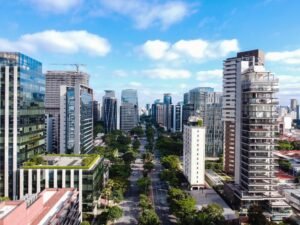
These numbers point to a market that is becoming increasingly relevant beyond Brazil’s traditional property centres.
The luxury segment is expanding
One of the more interesting developments is happening at the upper end of the market.
The value of luxury residential launches across the Northeast increased from approximately R$1.6 billion in the first half of 2024 to R$3.6 billion in the first half of 2025 — more than doubling in just one year.
Luxury unit sales also increased from 657 to more than 1,000 units during the same period. (cbic.org.br)
This matters for international buyers.
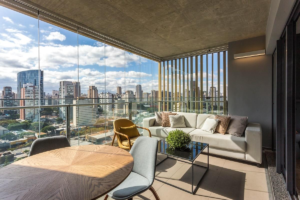
The opportunity is no longer limited to relatively inexpensive holiday apartments. Developers are increasingly targeting buyers looking for larger residences, premium locations and higher-quality amenities.
Tourism is strengthening the underlying demand
Real estate and tourism are closely connected in many Northeast markets.
International arrivals to the region’s airports increased 25.1% in 2025, reaching approximately 838,000 international passenger arrivals. Bahia, Pernambuco and Ceará accounted for more than 91% of this total. (bnb.gov.br)
Bahia alone received 211,539 international visitors in 2025, an increase of 47.3% compared with 2024. The state accounted for 43.7% of all international visitors arriving in the Northeast. (ba.gov.br)
Ceará also recorded a record year, with 340,000 international tourists and overall tourism growth of 8.35% in 2025. (ce.gov.br)
Fortaleza, for example, received more than 4.1 million tourists in 2025. International visitors increased by 19.5%, while average length of stay increased from 4.8 to 6.3 days. (fortaleza.ce.gov.br)
For property investors, these trends are relevant because tourism creates demand for both short-term accommodation and longer-term residential property.
Why the Northeast is attracting attention
The investment case is not simply about lower property prices.
Several factors are coming together:
Tourism growth
More domestic and international visitors are expanding the addressable rental market.
Improving international connectivity
New and expanded international routes are making destinations such as Salvador, Recife and Fortaleza increasingly accessible.
Growing premium development
The rapid expansion of the luxury segment suggests developers are seeing stronger demand for higher-end residential products.
Regional diversification
The Brazilian property market is becoming less concentrated around São Paulo and Rio de Janeiro. ABRAINC’s 2025 ranking specifically identified the strengthening of regional markets as a major trend, with Fortaleza among the cities making the largest gains. (abrainc.org.br)
But the market is not uniform
This is perhaps the most important point for international investors.
“Northeast Brazil” is not one property market.
Fortaleza is fundamentally different from Recife. Salvador is different from João Pessoa. A beachfront apartment in Ponta Verde follows a different investment logic from a residential property in an inland neighbourhood.
Even within a single city, the difference between two neighbourhoods can be substantial.
That makes location selection increasingly important as the market develops.
The strongest opportunities may not necessarily be found in the markets that have already experienced the greatest price appreciation. They may instead emerge where tourism, infrastructure, residential demand and new development are beginning to converge.
So, is Northeast Brazil the next property market to watch?
The data suggests that something significant is happening.
Property sales are rising. New development is expanding. The luxury segment is gaining momentum. International tourism is growing rapidly. And a number of Northeast capitals are becoming increasingly important regional property markets.
That does not mean every coastal property is a good investment.
It means the Northeast deserves to be analysed as a collection of individual markets with very different fundamentals — rather than simply as Brazil’s holiday region.
For international buyers, that distinction can make all the difference.
At Ipanema Real Estate, we focus on identifying the markets, neighbourhoods and properties where these fundamentals come together — including opportunities that may never reach the international property portals.
The next phase of Brazil’s property market may not be happening in Rio or São Paulo. Some of it is happening further north.